In this blog post I will be writing about single camera productions. I will explain about the camera and how it is used, how the lighting is affected in single camera productions, the sound track/dialogue and the editing. I will then go into further details and explain about the single camera genres and formats. At the end i will talk a little about the multi-camera techniques and how this is different from single camera. I will talk about the advantages and disadvantages of single camera to multi-camera.
If we reflect back to moving images whether you are using single or multi camera production it is never easy to film as both techniques do come across their issues. However some people believe that the use of single camera production is not always as good as using multi camera production. Lets focus now on single camera production.
How is the camera used and the footage shot? As you may be able to tell the name "single camera production" says it all. When doing a single camera production every scene is shot with only one camera and most of the time exactly the same camera throughout. Although this is only done with one camera you can still gather amazing shots from different angles and different distance. This means that the actors will have to repeat the same steps over and over again as one scene can be shoot multiple times from different angles and distance. This means that the camera itself is moving however the set and the actors are still at the spot. Because of the repetitive reenacting and shots, the single camera production tends to take a longer period of time to complete.
How is a single camera production lit? When it comes to lightening a lot of producers actually prefer single camera production as the lightening is easy to sort out for just one camera as each scene can be lit individually. The single camera production lightening is done by a method named " 3 point lighting system". Basically the lightening is done using 3 sets of light. Two of these will be placed besides the camera one on each side focusing on the subject. These lights are normally called "Key and Fill light". The third light is what they call "back light", and this is placed behind the subject to clear out any shadows. This light is not seen on the footage.
What are the advantages and disadvantages of sound in single camera.
Just like the lighting the gathering of audio for a single camera production is is good and flexible. The reason for this is because of the various amount of time the scene is shot. Meaning that there is a various amount of audio that is gathered too. When editing the editor has a variety of choices to pick from audio. For example they can pick the best footage visually and combine it with the best audio as long as it fits.
When it comes to film production the most common device used for this is the boom mic. This is a directional mic which is mounted on a boom mic and then placed just out of the view from the camera. The reason a boom mic is so good for capturing sound is due to the insulation around the mic preventing the vibrations from surround to be captured. The only complicated bit about using this mic is controlling the distance from the character and the mic very carefully. This kind of mic is a great choice to film outdoors where wind and horrific ambient sound tend to be a problem.
In single camera production a really good technique used to make the audio fell less jumpy and awkward is extra record. The producers tend to start recording the audio a little earlier then what is meant to and at the end they carry on recording for a little longer. This is good simply because when it comes to editing they can cross fade the audio of the same scene gathered from different shots. By doing this the audio will sound much more fluid with no awkward jumps.
However there is a disadvantage when capturing audio in single camera production. When doing this they are only using one camera meaning the there will only be one mic recording the audio. This is a disadvantage because a single mic will not capture as much audio and ambient sound as three, four or more mics would. Although in single camera production there are various amount of audio to choose from when editing there are less good choices of ambient sound to pick as there is only one mic involved in every shoot.
When it comes to dialogue there is not much problem as the footage can be looked back at and the dialogue can be recorded in the studio an then embedded in post production.
Multi-camera productions tend to use various amount of mics. These mics tend to be wireless an they are normally tapped onto the actors clothes. Some are hidden in different places of the set. Other mics are normally seen on camera, for example shows like, x-factor and Britain got talent. The reason being for the use of so many mics is simply because when there is an error with the audio it is much harder to correct it in multi-camera production as many of them tend to be live. How is a single camera production edited?
When it comes to editing in single camera production it is necessary that time is taken into consideration as this normally takes longer than multi-camera editing. The reason being is simply because each scene will have a massive amount of shots taken. The process goes by taking a master shot of the scene which opens the scene from a wide and long angle, these are then followed by various shots from various angles. Some people tend to keep what is called "Shot logs" so that they keep track of the shots taken and the times it has been taken. The editor has to have his work area well organised so that finding and picking the right shots for the right scenes is easier. In multi-camera production footages can sometimes be edited live as there are multi cameras from different angles. This is useful simply because the editor controls and chooses which camera we see at time.
5. Single camera genres and formats.
There are a load of different genres in film, TV shows, etc. However when filming with single camera genres tend to jump it automatically. For example using a single camera would be more beneficial to film a horror film. This is because with the use of only one camera we can control the lighting better, the angles and also the actors. We can go right up to the actors with the camera as there are no other cameras filming. Close ups on a subject is really good as it will give the viewers that exciting, mysterious, dramatic feeling alongside with building tension. This gets the viewer more involved with the film as it gives that personal feeling with a subject. Other genres such as thrillers and crime dramas are in the same area as horror, it benefits from the use of single camera and most times it is actually better to only use one camera for these.
A genre that would benefit more from multi-camera production rather than single is comedy. The reason for this is simply because we have more cameras to be able to catch all of the actors natural reactions to a certain event. If we were to do the same with a single camera it would be much harder and time consuming as we would have to stage everything once again and re-do the shoot from the angle we want. Soap opera is another TV genre which is normally filmed using multi-camera production.
Alongside with the genres there are a few formats that go with single camera productions.
The most common formats in single camera production are series, serial and single drama. You may think you do not know any however Im sure that you have came across all three of these at least once.
"CSI" would be a great example of a series. This is when the program is based around the same central characters, ran episodically with a different story line and episode every week.
A serial is similar to a series however at the same time slightly different. A serial also runs in episode for an amount of time, some serials may never end, at least in your life time. However instead of having a new episode with a different story line the story in a serial develops with time. These would be soap opera such as "Emerdale and Hollyoaks". An example of a common serial would be "Pride and Prejudice".
The last one is single drama, this is different then the other twos simply because a single drama is more like a short film. A single drama normally tells the whole story in one single episode. The minimum length for a single drama is 5 minutes. A great example of this would be "A short stay in Switzerland". It also won the 2010 BAFTA.
7. Multi-camera techniques Multi camera technique is very widely used in many films and television programs. Most cases it would be very difficult to film a certain scenery with just one camera. This is because it would be impossible to cover all the action happening. An example of this would be sports such as football, rugby and basketball. The fact that there are so many players on the field and all at different points at the same time makes it impossible to film everything that is happening. In order to do this various cameras are set up in different places and angles. Other example of television programs that are filmed using multi camera are talent shos such as X-Factor and Britains got talent.
Multi camera are mostly used when the filming is done live so its slightly easier to edit as it goes along. It is also used when a scene can not be filmed again without creating a continuity error. Films such as action films where there are many things happening at once may not be able to be re-shoot so multi cameras are placed everywhere to cover every angle and catch every detail needed to edit.
Using multi-camera has its benefits, it saves time as the amount of shoots needed to be retaken will be reduced due to the various amount of cameras planted, Another benefit is that there will be less continuity error as there are cameras everywhere and many shoots will not need re-takes.
However the bad side of using multi-camera technique is that when it comes to lightening it is much harder to lit the whole scenery and make sure that the lightening is consistent throughout every camera. A second disadvantage to this would be the transporting of equipment. Having more cameras means you have more to carry with you to the scenery.
9th February
We were given our groups at the start of this week. I was put with Ed and Jamie. We then sat together and read each others script and had a discussion about and in which one to shoot. After reading we also took in consideration if the script is actually possible to shoot, if we can get hold of the scenery, the right props and costumes and also similar characters. At the end of the lesson we decided we would do Ed's script called "The last laugh".
10th February
Next day we immediately started to work hard on the pre production, we started to do our paper works. Ed and Jamie took control of the story board as I had not been well to attend every lesson. When i came back I started to do the rest of the paper work such as risk assessment, talent releases, location release and location recces . As we did this we realized that some of the shoots would not work so we took out a few scenes and added new ones to the script. We did this for the rest of the week.
23th February
After our week off we started to organize and decide where we would be shooting, we then went out and took photos of these places. We used the week to also finish on the story boards as these were quite long and hard to do.
2nd March
Having all the paper work done and dusted included the story board we had to start filming. We used this week to start filming the scenes which were easier and faster to do and at the same time flexible to do in lessons. Throughout out the week we went to Jamie's to record some of our footage. In the same week we also went to my place and used the creepy room to record some of our scenes.
9th March
We started to use the lesson time to edit the bits we had already recorded the previous week, we did not do any filming during lessons in this wee simply because the rest of our scenes happened at night time so we would have to wait until it gets dark so we filmed after lesson times around 7/8pm.
12th March
It is almost the end of the week and the deadline is on the 13th March. We will not be able to meet this deadline as we still have some filming to do and everyone in the group are only available on the following Monday.
19th March
Luckily we were given more time to finish and edit our short film. However today is the last day we have on this bit of work. Ed, Jamie and I have worked really hard editing and adding all the effects to make our work look better. We topped it up with some sound tracks from incompetech. We also use after effects to do the final bit which was our title and also our credits.
In the end i am quite content with my final product although it does not look as amazing as i expected it turned out okay. I managed to keep this up to date and met the deadline. The pre-production work turned out to be fine as the making of an E-sting is not a major thing it was easily done, i did not have to go into much details about risk assessment etc as this animation only involved clay, camera and some mise-en.scene.
We had a class discussion about each others E-Sting and from my classroom i had a few good feedback and also some negative feedback. For example some people said it did not run smoothly at times. Other people said they really like the characters movement.
I would not say that i have had many issues doing this work, however i did have a few. For example I wanted to make the ball jump smoothly; this was slightly hard to do as i would need something to hold the ball up in the air, this also could not be noticeable in the camera. I figured out a thin transparent string. After i filmed some scenes and started to edit half of it i noticed that the string was a lot noticeable by the camera and that i had to edit it out. This left out some bad effects (marks) on my final product which did not look so good. Because of this i had to cut out what i would say the best scene due to the use of the string a lot. My E-Sting turned out to be much simpler than i intended.
Another problem with my E-Sting is that there is a big jump half way which is really noticeable. The reason for this is that I started filming and did not managed to finish before the weekend, so i had to film the rest in another week. The lighting was a problem as it was much darker that day. Also the camera and the characters position were not accurate as i did not mark exactly the position everything was.
One last problem with my E-Sting was that the brief asked to make a 10 seconds long animation, although i had cut out scenes and i also speed up my animation it went over the actual timing by 1 extra second.
I decided to show people my final product for them to evaluate for me. The way i did this was to make a quick survey in consisted 10 questions which covered most areas of my E-Sting. Once i had done the survey i quickly sent it out to a few people and awaited for a feedback. I managed to get back 20 responses.
Here are some screen shots of my feedback:
First I started by asking what is their gender. The reason being is so i see that my feedback is not influenced in gender. As You can see i have had 9 female responses and 11 males. This means that i have a variety of audience feedback from males and females, so my feedback is not just based on males or females.
I then asked my audience how old they were. Once again the reason for this is that i wanted to collect information from a variety of age groups. I think i succeeded on this as the age group between my audience is not very big but there is a wide range of age groups.
1 person was 14 years old.
4 people were 15 years old.
3 people were 16 years old.
1 person was 17 years old.
7 people were 18 years old.
1 person was 19 years old.
1 person was 22 years old.
1 person was 23 years old.
1 person choose not to say their age.
Although i did not managed to get any higher or lower age group to watch my E-Sting i am quite content with these as this is normally the sort of age group E4 aims for.
I would say that the third question was one of the most important question. I have asked my audience if they have ever heard of an E-sting, 10 said no, 9 haply said yes and 1 skipped so i guess that would be a no. This may not necessarily mean that they have never watched an E-Sting, simply they may not know what it is. Before i started this project i had watched many E-Stings in my life as i am an E4 fan, however i had no idea they were called E-Stings.
After that i went straight into my E-Sting and asked my audience if they though my E-Sting ran Smoothly. Obviously people have different opinion when it comes to quality and once again i got a different variety of responses. 13 people said yes, as 2 completely contrasted and said no. The other 5 said that it runs smoothly only at times.
The following question was to know if the audience knew a little bit about animation. I asked them if they could tell what type of animation was it. From the feedback i got only 5 people knew that it was a clay stop motion animation, the other 15 had no idea.
I then asked if they liked the characters i have created, if it was pleasant enough. This feedback was really good as every person really liked the characters.
After that I was curious to know if my E-Sting was actually appropriated for the age group i was aiming at which is between 14 years old to late 20s. To do this I asked the audience what age group they think my E-Sting is aimed at. 57% of the audience think my E-Sting is aimed at people aged 14-21 years old, 31% think it is aimed at a much younger audience aged 6-13, the rest think it is aimed at people over 21 years old.
Overall i think my E-Sting could have been more creative as I had more in mind then what i actually produced. However I asked the audience if the think my E-Sting was creative and every single one said "Yes". Although it did not come out as i expected i am still very happy with it.
One of my last question was to find out if i had any chance of winning the E-Sting competition if i did submit my E-Sting.
So I asked the following question to see if people think my E-Sting would have a chance of being on TV and as we can see most people actually think they can see my E-Sting being on TV. Some where in doubt and said maybe, but only a few said no there is not a single chance.
My last question was to see if the audience would make any alteration to my E-Sting, what would they improve and what they would keep. Only 13 people actually answered this question. This might be because it was a written answer and not many are willing to do it. However the answers i gather from this question varied from good points such as "Nothing really I like it all, Its fantastic, Nothing the animation is good", to some negative points like " The music, the character development, make it run more smoothly, characters development".
Looking back at my feedback and knowing that i had a balanced response from good and bad points i am quite please with my overall and finished product.
What format do I propose to use to create an ESting?
For my ESting I will be using stop-frame techniques combined with Claymation. I know the difficulties of a Claymation Esting at this time of the year due to the cold however using clay is the best way to create accurate and more detailed movements. The reason I need good movements is because of the fact my Esting is going to be based on a football striker scoring a goal and for that I will need a flexible character who can do movements that lego or anything else can not do such as moving his knees, shoulders, back and elbow. What will happen in my proposed ESting?
On my ESting we will see a football striker hitting the ball from a free kick position and the goalie just missing the save, when the ball hits the back of the net it will splash into the E4 logo. The ball will take an unusual tour with an impossible curl before it hits the back of the net.
In regards to diegesis, where will my animation be set?
I will try to make the place where am shooting to be a more suitable setting and look slightly more like a football field. However the exact location where my shooting will be done is in my media classroom. Using some of the class facility i will try my best in order to make it look a bit realistic. Are there any limitations or difficulties to face when you produce my ESting?
I think in term of limitations I will not be facing one unless we run out of clay, apart from that everything else should not be a problem. If the clay does run out I will get in contact with my teacher in order to get hold of a new set. I will use my own classroom to set the setting, and everything else such as the clay will be provided by the college. Who is the target audience for my ESting?
I say the primary audience for my ESting would be males. Demographically, males who are into sports especially football. Their age would be between 14-40 years old. It is also targeted to any football fans who like to watch football. Demographically males and females who. do not quite keep up to date with football or sports but enjoy sitting around, talk and having a drink with another primary audience while watching sports.
My characters:
Here are the two main characters i will be using and everything else that i will be using for my E-sting.
This is my E4 logo that i have created out of clay. This logo will be used towards the end of the E-sting when the ball hits the back of the net and then transforms into this logo.
I chose to start my sting by having two clay balls smoothly roll into the scene, these balls will then transform into each of the characters. For example the purple ball will transform into a a goal keeper, and the blue ball will transform into a striker who will kick the ball.
This is one of my main character. This goalkeeper is not any ordinary keeper, his characteristics are not built for a goal keeper. He is short and thin compare to all the others. However he is very flexible, agile and has great reflex. He is currently 23 years old and is signed for Gorleston Rangers FC. This Purple and white guy is also made of clay. I choose those colors specifically because i was not quite decided whether I shall have the ball hit the keeper and since the E4 logo colors are already there the keeper will transform into the logo.
This character is also one of the main characters, he is also made of of clay. He is the one who will strike the ball which will then transform into the E4 logo. This strike is also very distinguished, he is a big guy and very strong. He is a ball winner and has an incredible shot power. Unfortunately he is towards the end of his career has he is already 38, soon he will leave Yarmouth Town FC.
This is simple the foot ball. I also made this out of clay. The reason the color of the ball is white and purple is because the colour of the E4 logo is white and purple. This will make it slightly less confusing to the audience.
This is my set in which i created of a fabric smooth green material in order to give it a football green grass background. The goal i used clay to make the posts as the clay is flexible. The net of the goal i simple created by connecting white strings cut into correct sizes to the back of the goal post.
This set was located on my media classroom at East Norfolk Sixth Form College.
Music/soundtrack.
For my foot e-sting i used two different sound tracks from the E4 website. My first choice was the "HARDCORE2". This was used for the first three quarters of my e-sting, then i used "DRONE_BEAT9" for the last quarter. The reason i decided to mix these two was because the first track, HARDCORE2 fits well with the pace of my e-sting and the second track i decided to use it as the first track does not say E4 and i wanted my the words E4 to be said when the goalkeeper transformes into the E4 logo. I think my choice of combining the two songs was a great idea as it works well.
Bellow are all my relevant planning paperwork.
Budgeting Sheet
Location Release
Risk Assessment
Production Schedule
After all the pre-production work and all the paper work was out of the way i started to shoot my E-Sting. This required a number of still shots with a slightly movement each time I took a picture. Once i was happy with the number of shots i had to fit into a 10 seconds long E-Sting I stopped shooting and started to edit using Premiere Pro.
When making my short 10 seconds E-Sting I had no problem financially. Most of the equipment were available and provided by the college, for example the clay, and the green sheet i used as grass. Originally i planned to make my own football stadium background in the computer and print it out. However after been shown the green sheet I seen that it would look a lot more realistic and original. I did not have to buy anything extra so my budgeting stayed at £0 as you can see from my budgeting sheet at the top. I used clay, green sheet, and while lines in which were all provided by my teacher at college.
In order to film my E-Sting I had to complete a location release sheet in order to have legal permission to film in my classroom at college. This sheet was then signed by one of my teacher which gave me legal approval to film where i wanted.
This section of the blog post is going to be about E4. E4 is a British digital television channel. This channel was launched in 2001 by pay-tv companion to channel 4. The letter E was picked on purpose, the main reason for using it is simply because E stands for entertainment (1). The programs on this channel are normally aimed at younger generation, these would be the primary audience. However E4 concentrates on delivering entertainment and fun to people aged 15 to 35 (2). The secondary audience for this channel would then be any one who is younger than 15 and older than 35.
E4 has been around since 18 January 2001, however it did not become a free view channel until 2008 when it became part of the basic sky satellite (1).
Here are some pictures of what E4 primary audience would look like:
Again these are the main audience that E4 aim at. Most of the programs broadcast in this channel are normally aimed at these people bellow who are withing are 15 to 35.
Younger Audience age 15+
Audience on their 20s+
Audience on their 35s
Based on the shows and programs that E4 broadcast and looking at their primary audience it was obvious that their demographic would be any female and male between the ages of 15 and 35. The main reason for this is simply because most programs are comedy based with a lot of adult humor, for example how i met your mother.
Looking at E4 psycho-graphically we can tell that the programs attract more younger audience especially males as most of the audience tend to relate to the program in a way. For example the big bang theory is mostly about 4 mature scientific male students. Many young audience can relate to this has they are still in education, some may even be fascinated by this and look into some scientific course at a university themselves. Another example would be The Inbetweeners, again this is all about 4 students who are more into going out having fun and meeting girls. This can also relate to alot of young males today.
Here are some pictures of what E4 secondary audience would look like:
Again these are the people who E4 are not really aiming at however they might be influenced by the primary audience and still watch it. For example if a girl aged 18 is watching a program and her grandmother who is 60 walks in, she might sit there and watch the program with the girl. This is then identified as the second audience.
These are the audience under 15 who is not specified as the primary target however may still be a secondary audience to E4
These are the much older audience who again is not under the primary audience for E4 but may still be a secondary audience.
Again more younger audience who is not classified as the primary audience but can be secondary audience.
Demographically E4 secondary audience seems to be much older, mostly elder females who tend to have plenty of spare time especially at morning times and afternoon. The reason for this is simply because at those times E4 normally broadcast programs such as "One Tree Hill". Programs like that tend to not have much adult humor and are more serious. Just like the primary audience, the secondary audience can also relate to the programs they watch. Normally these elder women tend to be well educated and knowledgeable. By watching their programs they they enhance there knowledge and also they get to learn new things where they can discuss about later. This type of interaction tends to grab their attention in which plays good role psycho-graphically.
Here is a screen shot and an embed video from the actual channel 4 website explain about their audience/viewers.
In blue writing are some of the most popular programs shown on E4:
E4 is one of the six channels owned by channel 4. This broadcaster also owns "4SEVEN, FILM4, MORE4, 4MUSIC and 4oD".
Each one of these channels have their purposes, it is obvious what kind of things are broadcast in each of these programs by their names. For example "FILM4" would obviously broadcast mostly films.
E Stings
E Stings is a competition set by E4 in which people are allowed to compose a 10 seconds short animation where the E4 logo will have to be embedded or a part of the video a a way. There are a set of rules which everyone must follow if entered. Also there is a set of entries for the competition so applicants must come first. Once all the animations are collected some of these will be broadcast on E4 and within a few days a winner will be picked. The prize for this competition is £5000 and the runner up gets £500.
Here are some current examples of E-Stings shown on
Duck Hunt.
I think Duck hunt is a rally good Esting, I think it was well animated and the movements were all smoothly and well created. I like the fact that there is a man shooting ducks and he shoots down the E4 logo and the fact it lands on top of him makes it hilarious. I think because of the character on this Esting the audience for it would be a much older audience, I would say 40 years old plus. I would say that this Esting genre is comedic because of the fact of the hunter ended up being hunted by one of his prey.
EEFam
I really like this Esting, it is actually my favourite one out of the lot. The reason I like this Esting so much is simply because I can relate to it in a way. It summarises the day to day life at home in ten seconds. It also gives a solution to it on the end in which I wish I could do. I would say that the main audience for this Esting would vary between 17-25 years old man. Once again the genre for this Esting would be comedy.
My kingdom for a horsey
For me this Esting is one of the best by far, I find it hilarious and the song is really catchy. The lyrics are the best and funny. Once again the animation was really well done and smoothly. The characters outfit is simply amazing, socks, shorts and pink shirt, with a horse face. The audience for this Esting can vary however I would say the audience would be a younger audience but not too young, at least 16 plus. This Esting can fit into two different genre I would say. It can be comedic because of how it is set and done and also musical because of the fact the horse is singing throughout the video.
So far I have done a few background research on the techniques and development of stop motion animation. This has helped me to prepare myself to this Esting. I have learned about and how to create a Thaumatrope, Praxinoscope and Zoetrope. In fact I have made my own one of some of these.
Thaumatrope
I drew a picture of a weight lifter on one side of the paper then i drew the weight itself on the opposite side also on the reverse so the level was balanced. Once i had done this i place strips on both sides of the circular paper allowing me to spin it really fast. Once spinning this circular paper it creates an illusion that both image are on the same side meaning that we see the weight lifter lifting the weight.
Thaumascope:
In order to do my thaumascope i used a little help from the internet to print a set of repeated running clown. The reason i did this was because i am not very good artist and i really wanted to do the running clown. The thaumascope i made by having a strip of paper divided into a few squares which are all the same size then you draw something each time in a different square with a small movement in which will finish almost similar to the first draw.
Praxinoscope:
I enjoyed doing praxinoscope the most. Praxinoscope is again done similar to all the others, the trick is to draw images with small changes. The last drawing must nearly be similar to the first one in order for us to have repeated action. For my praxinoscope i did a table tennis play racket
I also got together with some other colleagues and we created a short live action SMA video using various amount of still images. Here it is:
On this short live action we were chasing a suppose to be very interesting book. We did have to skip a few actions in which we intended to do simply because of the time we had was not enough. However as a first practice i think we kind of got the movement quite well and made it look fun to watch.
I built my characters out of legos which were provided by the teacher.My characters are meant to be a giraffe and a robot. I actually did not have time to make a proper video has i had been of college. When i got back i just made a quick and short video out of a small number of pictures taken. This was done in my media classroom, in fact at my table with a pink sheet as the background.
The reason i did this is to illustrate how my E-sting video will be done and how it might look like. The only difference is that i will be using clay instead of legos in order for better movement.
Auguste and Lois were seen as the Lumiere brothers. These two were quite clever people with a big passion for science and photography. Auguste was the one who started to manufacture and supply most of the equipment for photography and his brother Lois was doing all the testing to the equipment. The reason these two are so important in the world of media is because they were the ones who was credited for being the first filmmakers in history.
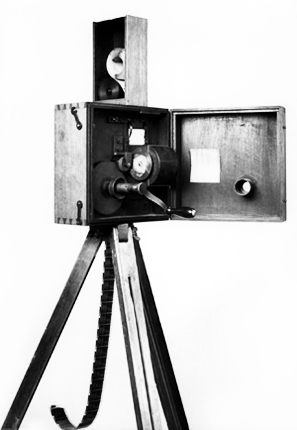
Their main mission was to overcome the kinetoscope. After a lot of experiments and testings the brothers managed to invent a new device in 1895, this was named cinematographer. This new device was much smaller then the kinetoscope and also used less fps. Another advantage was that the hand crank made much less noise.
Kinetoscope:
Invented by Thomas Edison.
Cinematographer:
Invented by Lumiere brothers.
The stop trick - (George Mellies)
George Mellies was the man who accidentally came up with this stop trick idea. This was done when he was filming Paris traffic when his filming stopped until he made it work once again. When he played back his footage he had notice that an omnibus had vanished in the middle of the footage. The stop trick is done by pausing the film and removing the object from the sight of the camera. Once the object is removed and the film carries on it will create an impression that the object disappeared from the footage.
Using this amazing illusion George Mellies bought his own theatre in order to start producing comedic illusions in order to entertain the crowed. This was very successful and made George more popular at that time. With this he started to work behind scenes on his theatre producing films. One of his most popular films made using the stop trick was "A trip to the moon" made in 1902. Resuming its all about a spaceship instead of landing on the moon it flies straight into the moons eye. Again another comedic film which made him more popular. A few years later on he was given the praise of being the first cinemagician. He was congratulated with the legion of honour for his contribution to the cinema in October 1931.
Here is a short example of one of his stop trick film.
The Kinetoscope - (Thomas Edison)
This invention was a large box where people could look into and be able to view motion picture. This was introduced as the standard for movie projection. The Kinetoscope created the illusion of movement by conveying a strip of perforated film with sequential images. Similar to a flip book when you draw a set of images with slight movement and you flip the pages quickly creating an illation of movement. Thomas Edison was the man who came up with this brilliant idea. He was inspired by Eadweard Muybridge when he attended of Muybridge's lectures. He then filled a preliminary claim known as a caveat. This claim announced that he would create something that will "do for the eye what the phonograph does for the hear". The Kinetoscope first came out in August 31 1897, it was a brilliant way of viewing moving images however most of the film strips would get destroyed after a few viewing. The main reason for this was due to film nitrates. Although most of his footage was destroyed he had made paper copies in which he called his contact prints.
Phenakistoscope - (Joseph Plateau)
Joseph, a Belgian male born in 14th October 1801 was know as "Physics of soap bubbles, Plateau's problem" was the first person to ever create and demonstrate the illusion of moving images. He was the first man to make still images appear as they are moving. The way he done this was by having a set of repeating still images in small increments of motion on one and regularly spaced slits in the other. These images were placed in a rotating disk in which he would call the final product Phenakistoscope. This device was first invented in 1832.
About Phenakistoscope: The Phenakistscope was a very simple device, at the same time a very intelligent device. It did what people would most like to see at the time, moving images. The Phenakistoscope was made up of a simple spinning disk attached to a vertical handle. On the spinning disk you would then place series of spaced images with slight movement. Between the images there were series of equal spaced slits where we would see the animation through once it is ready and spinning. While the disk is spinning we are able to see the reflection of the images through the slits where a mirror would be found at the back. This mirror reflects the image in series of repetitive animation.
Here is an example of a Phenakistoscope:
Zoetrope - William Horner
William Horner was a very intelligent man, he was quite good in school especially at maths. He became a British mathematician, schoolmaster, head master and school keeper. He created the first Zoetrope in which he named the wheel of the evil in 1834. This invention was closely related to the Phenakistoscope disk, they did a similar job. The difference is the appearance was slightly different. The spinning disk is found inside a circular drum structure with slits on the side where you can view the pictures through. These pictures would create an illusion of moving image when it spins.
Praxinoscope - Charles Emile Reynaud
Charles lived for 73 years, lets say he lived long enough to ensure his name would be in history. Just like the other few I have spoke about Charles was also an expert on motion images. Throughout his life he was a science teacher, however this did not stop him from doing what he most liked, creating new devices. He apprenticed to a precision engineer and then went onto studying sculptor-photographer. He continued his studies, gaining more and more experience from it. On 1876 he had a brilliant idea of creating a new optical toy for the children, he knew this would amaze them. He named his new optical toy Praxinoscope, and on the 21s of December 1877 he panted this device.
The praxinoscope was a modern version of the Zoescope, it was a better way of viewing moving images by optical illusion. The way it worked was by having a strip of 12 images placed around the inner side of the cylinder, these images would have slightly different movements. We then find another cylinder placed in the middle of the cylinder, there we would find mirrors which would reflect the image back to us in a moving sequence when the cylinder with the strip is span. The praxinoscope was classified as better than Zoescope simply because the image where brighter and easier to see the details. Later on Charles made some addition to his invention and placed an oil lamp to illuminate the images and for the mirrows to reflect them throw a lens creating a projection of the images into the screen.
Zoopraxiscope and Animal Locomotion - Eadward Muybridge
Eadward Muybridge was a very important English photographer, he was born in 1830 and became famous for his amazing photographs and interactions with photographic studies of motion and his early work in motion pictures projection. Today he is also famous for his work on animal locomotion. This first became popular in 1877 and 1878 when Muybridge used multiple cameras to capture motion in stop motions images. Then he used is zoopraxiscope, a device to project motion pictures that pre-dated the flexible perforated film strip used in cinematography.
Muybridge was very famous simply because his device the zoopraxiscope was a very important device displaying motion pictures. It was the first device considered as the first movie projector. The way this was done was by taking a enormous amount of pictures which the zoopraxiscope would the project in a rotating glass disk in rapid succession to give the impression of motion. "The stop motion images were initially painted onto the glass as silhouettes. A second series of disk made in 1892-94 used outlined drawings printed onto the discs photographically then colored by hand".
Animal locomotion is an act of self propulsion by an animal. This varies depending on the animal, for example swimming, running, jumping, flying etc. In the 1872 Muybridge would be hired by race horse owners for some photographs studies. There was a very interesting question going round at time. Everyone would like to know if it was true that all the horse feet were off the ground at one point while trotting. This would be hard to see by the human eyes as the action was fast. Muybridge took a series of pictures and proven that the point was indeed true.
Otmar Gutman
Gutman was once a German television producer, director and also animator. He was born on April 1937 and passed away on October 1993. He is quite known due to his creation of Pingu the penguin. This was a British television show for children. Pingu was done of stop motion claymation. Pingu was first launched in 1986 were they would air several short episodes. This was then transformed into a short film were Pingu's original name would of been Hugo. With the death of Gutman the pygos group were no longer the same, slowly slowly they were going downhill. Due to this all the assets of the company were sold to Hit Entertainment. Pingu was then relaunched by Hit were they put on air 52 episodes. At the end of the episodes Pingu was no longer to be seen again, it ended without any announcement. Unfortunately Pingu was only on air for 14 years, Since 1986 to 2000. With only 12 characters throughout its journey Pingu was seen as the second best television program for children in 1980's. Otmar Gutman was awarded with the Berlin internation film festival in 1987.
They Qauy Brothers The Qauys were identical American twin brothers, mostly known as the Key brothers. They were famous for their influence in the development of stop motion animation. They had been praised with feed back and critics for their incredible work. From a young age they interacted with eastern European animation. This had an impact on the way they reached and developed their animation. They focus a lot in the small details that could make a difference in the animation. They were also quite careful with their use of texture, focus and camera movement. This only made them a little more known for their unique work.
The feed backs were mostly very good however sometimes they would get one or two critics that were quite dismissive. However this is would simply be due to confusion as some of their animation could go into details that some would say its unnecessary and some would say its amazing.
Here are two examples of the kind of critics they would get, "even the smaller movements can make us feel as if we've never known the film before" however another critic said "on occasions the images are beautiful".
Here is an example for you to get a taste of their piece of work. They named this animation "The Cabinet of Jan Svankmajer".
Nick Park
Nick Park, again another legend on the stop motion animation. Nick is an English director, writer and also stop motion artist. Nick was born in 1958. Nick interest for stop motion animation started from a young age. He started by drawing cartoons and by the age of 13 he had made his own film. Today Nick Park is mostly known for two very famous animation, Shaun the sheep and also Wallace & Gromit. Both of these made using Claymation.
Nick started his career by studying Communication Arts at Sheffield, after that he went straight to National Film and Television were he started working on his first Wallace and Gromit film. This was named "A grand day out".
Nick specialized in claymation and he uses clay and Plasticine in order to produce all his animation. Claymation is when you use clay or any other flexible material built around a wired skeleton called armature. These are then placed in the scenery where shots will be taken before it is slightly moved by hand an prepared for the next shot.
Here is a very famous quote I found online from Nick Parker.
"Plasticine was available when I was a teenager and started doing animation. I wanted to be like Disney, trying to film with plastic cells, but it was all too expensive. And you would make whatever you like come out of the blob of Plasticine".
Some examples of his most successful stop motion animation:
Wallace and Gromit - 2007/2010
Shaun the sheep - 2007/2010
Chicken run - 2000
Creature comfort - 2003/2006
The long years he spent making Wallace and Gromit animation only grew his experience and gave him more confidence to move into stop motion quick action/adventure films. His first one naming Chicken run making his first big screen debut.
He was nominated for an Academy reward 6 times and he won 4 of these with Wallace and Gromit and also Creature comfort.
Tim Burton Timothy had many good qualities in animation. Timothy is an American director, producer, writer, artist, poet and also stop motion animator. He always had a big interest for dark and Gothic horror movies. He followed this interest and became popular and well known for his horror films such as "Edward Scissorshands and Sleepy Hollow".
Tim also started his animation career at a very young age, at 13 years old he created his very first animation named "The island of doctor Argo". This is seen as an adaptation of Herbet George Wells "The island of doctor Moreau".
With further creation of new shorts he had been influenced by the work of Dr. Suess and Roald Dahl.
Here is a trailer of one of Timothy's famous animation called " Frankenweenie".
With the success Tim was soon spotted by Walt Disney productions where they offered him an apprenticeship as an animator at the studio. He immediately started to work on his first piece of work at Walt Disney which became quite a success. Timothy started to work on "The Fox and the Hound" and also "The Black Cauldron". He worked on these as an animator, story board artist and concept artist.
Timothy dark side did not go well with Disney so he soon dropped out and went into working alone on his projects.
Dreamworks Animation
Dreamwork is situated in California, it is an American animation studio which creates and displays animated films, television programs and virtual worlds (animated computer games). Dreamworks studio is also known as Dream work SKG was formed and funded on October 12 1994. Dreamwork had became very successful over the past years. They have specialized in computer animation. They also have managed to release a total of 30 movies which have been a success. Based on all the featured films since the launch they have made a profit of 12 billion worldwide. In 1995 Dreamworks made a co-production deal with "Pacific Data Images to form subsidiary PDI, LLC". This deal had mean that Pacific Data Images owned 60% of the PDI, LLC while Dreamworks owned 40%. A limited liability company (LLC) is simply a " flexible form of enterprise that blends elements of partnership and corporate structures." This is "not a corporation, it is a legal form of company that provides limited liability to its owners in the vast majority of United States jurisdictions".
Like I have mentioned before dream work have been quite popular with the movies they have released. Over these years they released 30 movies. Im sure a lot of them you have came across. For example Shrek, Madagascar, Mega Mind, How to train you dragon, and many more.
Pixar Pixar started its journey on Luccasfilm, during their time there they were first Known as Graphics Group. Pixar soon left and started their own studio, this was thanks to a man named Steve Jobs who funded Pixar. Pixar started out their career as a hardware company but later on started to develop into animation. Pixar always loved animation as most of their staff included background with animation varying from stop-motion, computer and cel animation.
Although pixar had a passion for all kinds of animation they specialized in 3D computer animation.
Here is an example of one of Pixar short 3D animation:
Pixar has also released longer version movies whioch have also became incredibly popular. They released their first full lenght film in 1995 and this was "Toy story". Ever since they have released 13 more, today pixar has 14 full length animation movies released.
Although doing well Pixar was later on bought by Disney company. This transaction happened in 2006. Pixar had cost Walt Disney a value of 7.4 billion. With this purchase there were some complications and at times where Disney and Pixar fell out due to some changes. However further negotiations were done in order to ensure Pixar "remained its own entity and would not merge with Disney" so there are no further problems.
Hayao Miyazaki and Studio Ghibli
Hayao Miyazaki, again a well known animator. He is also known for his illustrating skills, producer, screenwriter and manga artist. This man was born in January 1941 and he began his carter in animation at the age of 22 in 1963 when he join Toei Animation. His very first animation he worked on was named "Gullivers travel beyong the moon". He did not stop there, he carried on an immediately started working on a new animation called "Lupin 3". In 1984 he made another successful film which was "valey of the wind". He then decided to join and co-fund the studeo Ghibli where he continued his great work and developed many known and successful films.
Miyazaki has had a big impact in the animation history. Many animators see him as one of the greatest, especially Pixar. Here is a quote i found online from John Lasseter, he is "Chief creative officer of pixar and director of toy story".
"Miyazaki is one of the greatest filmmakers of our time. At Pixar when we have a problem and we can't seem to solve it we often take one of Mr Miyazaki's films and look at a scenein our screening room for a shot of inspiration. And it always works! We come away amazed and inspired. Toy story owns a huge debt of gratitude to films of Mr Miyazaki."
More influences from Mr Miyazaki:
(screen shot)
Walt and Roy Disney - The Walt Disney Company
Walt Disney born 5th December 1901 was an American cartoonist and a filmmaker. At the age of 22 he started his film making career. He did this by producing his very first film "Alice's in Wonderland". This included a young girl actress interacting with other animated characters. The film itself had many genres, it was a musical, fantasy, comedy adventure film.
Here is a trailer of the film:
Walt disney inspired and determined to carry on he managed to create their first mascot in which is known by many people around the world, "Mickey Mouse". This was done in 1928; a few years later in 1934 Disney managed to produce their first feature length animated film "Snow White" which again was a success.
With all the success Disney only grew bigger and better, in 1972 they started to produce live action features alongside their animations. They also specialized in hand drawing 3D animation. They released their ever first 3D animation in 2005. "Chicken Little"; this was their very first 3D film however their 46th animated feature.
George Pal - Puppetoons Another successful man in the animation history. Pal Was born in 1908 originally in Hungary, He was an American animator and film producer. His films were normally related to science fiction due to his interest. He became an American citizen after he had emigrated from Europe. His animation skills were at the top, he was nominated for an academic reward 7 years in a row, in the area if cartoon/animation. In 1944 he was awarded with an honorary award.
Before starting his career George Pal first graduated with a degree in architecture and advanced drawing skills. His career began in when he was employed by Hunnia films in Budapest. During his time there he learnt motion picture cartooning where he originally specialized. He soon became head of the cartoon department at UFA studios. With this achievement he made a big decision and decided to take his work into his own studio where he discovered and learnt "his own way of making inanimate objects move by using stop motion animation".
On his own studio he later developed three wooden puppets were he named each individual but together he named them Puppetoons.
Here is one of his most known creations made and named "Tulips shall grow" in 1942:
The idea for this great piece of work had came from his background history and what was happening at the time. When he was developing his skills in animation at his own studios the "Nazi's were installing themselves in Germany and surrounding areas". This had an impact in his life due to all the moving he had done. Resuming this short animated film, it is about a young boy and girl living their happy life, but this was shortly ruined by what they called it "screwballs". These would demolish and destroy anything in their way. This pretty much sums and portraits the conquer y of Holland by the Nazi's.
In 1946 George Pal and one of his colleagues Ray Harryhausen got together and develop another successful stop motion animated short named "Mother Goose".
Willis O'Brien
Willis O'Brien born in 1886 was an american motion picture special effects and stop motion animation pioneer. O'Brien experience many job roles in his early life by the time i actually got into animation he had gone through farmhand, factory worker, fur trapper and also has a bartender.
Never giving up on what he actually wanted he would use his free time to participate in sculpting and illustrating. After a period of time this part time thing got him employed as a sports cartoonist for Francisco Daily News.
Willis O'Brien specialized in stop motion animation.With the development of his ever first film he managed to grab the attention of Thomas Edison who then employed in in order to animate some of his films such as R.F.D 10,000 B.C.
He then worked on other films such as:
The lost world - 1925
King Kong - 1933
His ever last film he work on was "Its a mad mad mad mad world in 1953.
 As you may be able to tell the name "single camera production" says it all. When doing a single camera production every scene is shot with only one camera and most of the time exactly the same camera throughout. Although this is only done with one camera you can still gather amazing shots from different angles and different distance. This means that the actors will have to repeat the same steps over and over again as one scene can be shoot multiple times from different angles and distance. This means that the camera itself is moving however the set and the actors are still at the spot. Because of the repetitive reenacting and shots, the single camera production tends to take a longer period of time to complete.
  When it comes to lightening a lot of producers actually prefer single camera production as the lightening is easy to sort out for just one camera as each scene can be lit individually. The single camera production lightening is done by a method named " 3 point lighting system". Basically the lightening is done using 3 sets of light. Two of these will be placed besides the camera one on each side focusing on the subject. These lights are normally called "Key and Fill light". The third light is what they call "back light", and this is placed behind the subject to clear out any shadows. This light is not seen on the footage.

 Alongside with the genres there are a few formats that go with single camera productions.
 Multi camera technique is very widely used in many films and television programs. Most cases it would be very difficult to film a certain scenery with just one camera. This is because it would be impossible to cover all the action happening. An example of this would be sports such as football, rugby and basketball. The fact that there are so many players on the field and all at different points at the same time makes it impossible to film everything that is happening. In order to do this various cameras are set up in different places and angles. Other example of television programs that are filmed using multi camera are talent shos such as X-Factor and Britains got talent.


.jpg)

.jpg)
.jpg)


.jpg)


.jpg)


